History of Burlington, Ontario
Between the Lake and the Escarpment
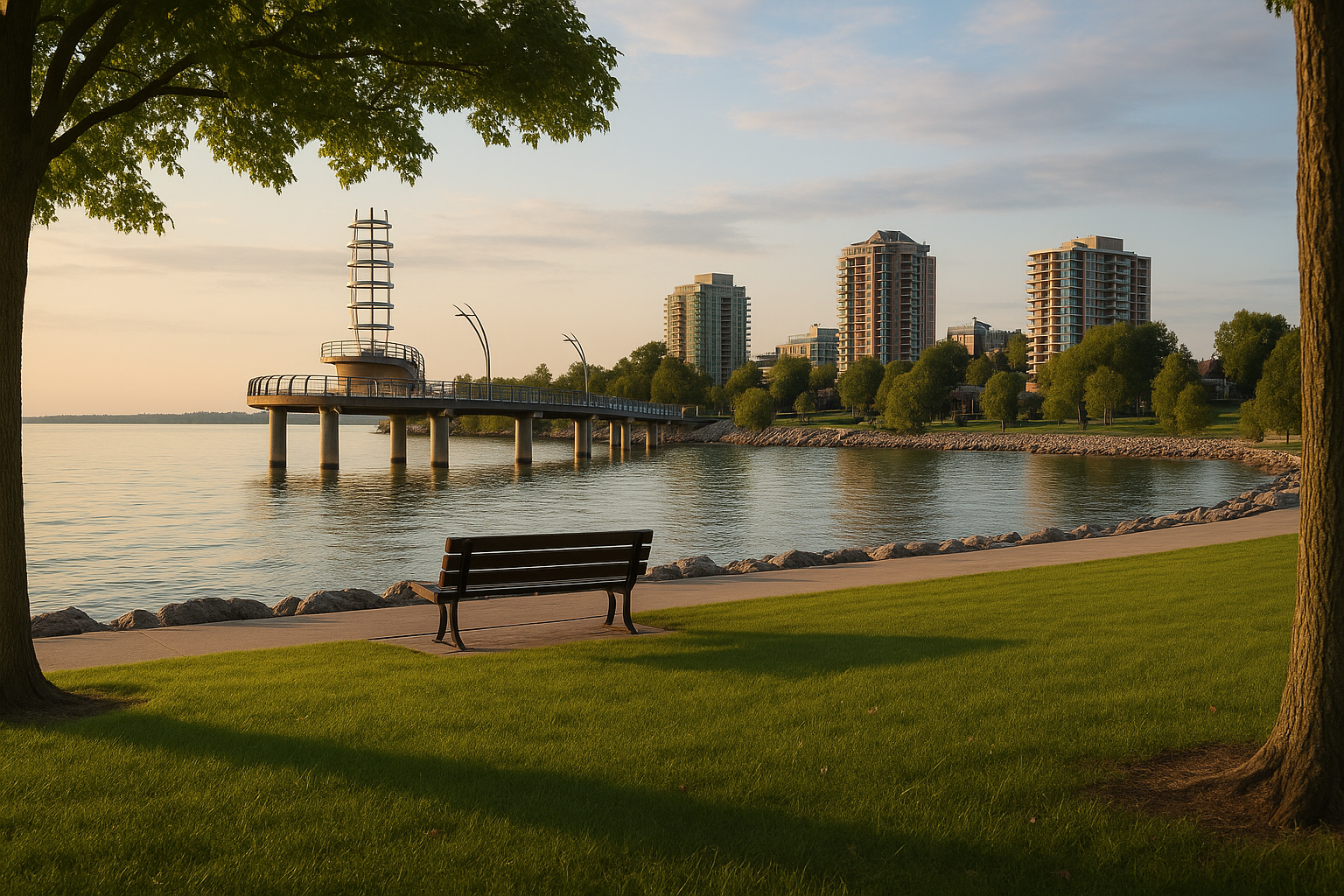
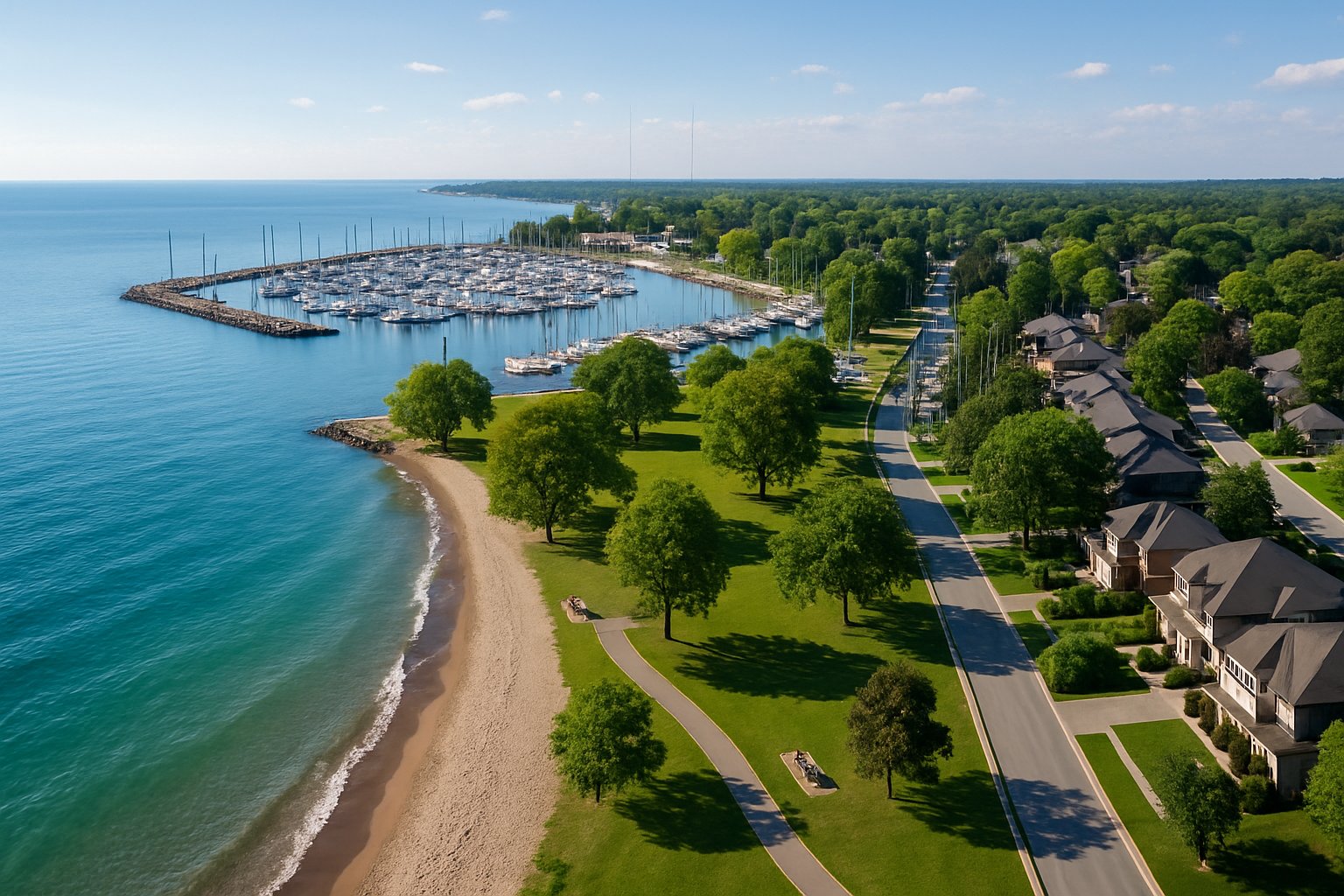
Stand on the Burlington waterfront and look out across Lake Ontario, and you’ll see one half of the city’s story: water, trade, and connection to the world. Turn around, and the Niagara Escarpment rises green and rugged in the distance, telling the other half: land, farming, and the steady roots of settlement. Burlington has always lived between those two forces—the lake pulling it outward, the escarpment grounding it at home.
Indigenous Lands and Early Settlement
Long before Burlington became a city, this land was home to Indigenous peoples, including the Mississaugas of the Credit and Haudenosaunee. The fertile soils along the lake and the escarpment provided rich hunting, fishing, and farming grounds.
European settlement followed in the late 18th century, after the British acquired the land through treaties, including the Head-of-the-Lake Purchase (1806). Loyalist families and immigrants from the British Isles began farming the area, carving homesteads into the wilderness. The location—midway between Toronto and Hamilton, with lake access for shipping—quickly made it attractive for commerce.
Naming Burlington
The name “Burlington” first appeared in the early 1800s, borrowed from the Burlington Bay (now Hamilton Harbour), which itself had been named by John Graves Simcoe, the first Lieutenant Governor of Upper Canada. He borrowed the name from Burlington, Vermont, and ultimately from the English town of Bridlington. Like many Canadian communities, the name is a patchwork of Old World echoes transplanted into New World soil.
The Farming Years
For most of the 19th century, Burlington remained an agricultural hub. The fertile plains between the lake and the escarpment were ideal for fruit and vegetable farming, and Burlington gained a particular reputation for fruit cultivation. By the late 1800s, the area was known as a centre for apple orchards and tender fruit, with produce shipped by rail and boat to Toronto, Hamilton, and beyond.
The Burlington Horticultural Society, established in 1879, played a key role in promoting agriculture and beautification. Even today, Burlington’s parks and green spaces carry echoes of this agricultural heritage.
Industry and Growth
Though farming was central, Burlington was never isolated. The arrival of the Great Western Railway in the 1850s and later the Grand Trunk and Canadian National lines tied Burlington to regional industry. Small-scale manufacturing developed alongside farming, but Burlington remained more of a market town than an industrial powerhouse.
It was proximity that mattered most. With Hamilton booming as a steel city and Toronto expanding as a financial centre, Burlington found itself in the middle—perfectly positioned to benefit from both without being swallowed by either.
Twentieth-Century Transformation
Burlington’s modern identity began to take shape in the 20th century. The construction of the Burlington Skyway Bridge (1958) over Hamilton Harbour symbolized the city’s integration into the regional economy. Suddenly, Burlington wasn’t just farmland—it was a commuter city, a manufacturing base, and a destination of its own.
The Queen Elizabeth Way (QEW), opened in the 1930s as Canada’s first superhighway, also passed through Burlington, linking it directly to Toronto and Niagara. The QEW and Skyway together made Burlington a critical transportation corridor, attracting businesses and making residential growth inevitable.
The Royal Botanical Gardens
One of Burlington’s most enduring landmarks is the Royal Botanical Gardens (RBG), established in 1932. Stretching across Burlington and Hamilton, the RBG preserves thousands of acres of wetlands, gardens, and escarpment forest. It is both a conservation area and a civic treasure—an enduring reminder of the region’s natural wealth.
The RBG represents a balance Burlington has always sought: urban growth tempered by an appreciation for green space. Even as subdivisions spread in the postwar era, the city maintained parks, trails, and waterfront access.
From Town to City
Burlington officially became a city in 1974, after decades of rapid population growth and suburban expansion. Its identity shifted from farming hub to commuter suburb, but it retained strong community institutions and a reputation for quality of life.
By the 1980s and 1990s, Burlington had become known as one of Canada’s most desirable mid-sized cities—close enough to Toronto for access, far enough to maintain a distinct, less hectic pace.
Modern Burlington
Today, Burlington is home to more than 190,000 people. Its economy blends advanced manufacturing, technology, and professional services with a continuing emphasis on conservation and livability. The downtown waterfront, with Spencer Smith Park and the iconic Brant Street Pier, anchors community life with festivals, concerts, and everyday leisure.
The escarpment continues to shape the northern edge of the city, offering trails, conservation areas, and panoramic views across the lake. Burlington’s planning has often emphasized balance: preserving green space, nurturing community, and resisting the unchecked sprawl that has transformed other suburbs.
A City Between
If Guelph is defined by stone and Cambridge by its patchwork of towns, Burlington is defined by its in-betweenness. Between Toronto and Hamilton, between the lake and the escarpment, between agriculture and industry, between old loyalties and modern aspirations.
This in-betweenness has proven to be strength rather than weakness. Burlington adapts. It borrows from neighbours without losing itself. It grows without forgetting its gardens. It welcomes newcomers while remembering its roots in orchard rows and homesteads.
Walk along the pier at sunset, with the lake stretching wide and the escarpment rising behind, and you can feel this balance. Burlington is not one thing—it is many. And that is exactly why it has endured.